

French VAT on alcohol advertising: a new deduction opportunity from 21 February 2026
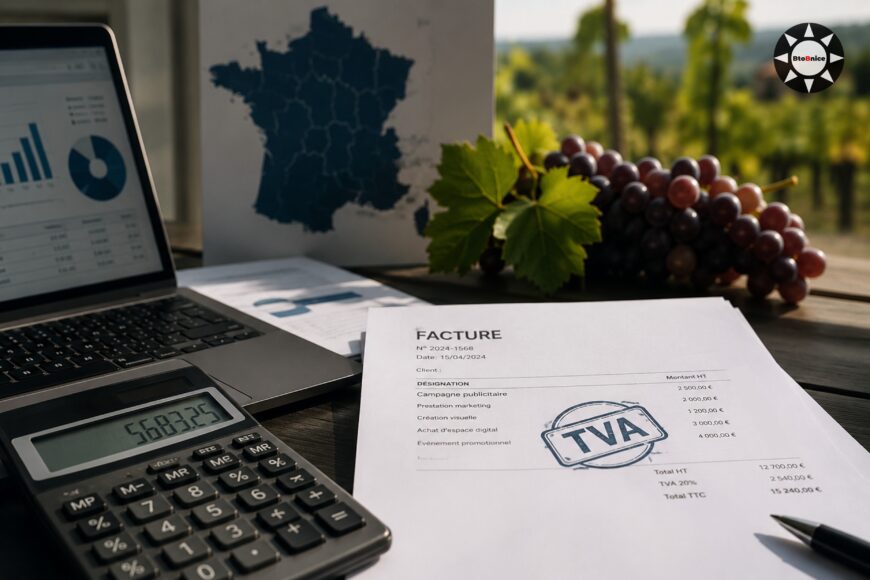
On 17 June 2026, the French tax authorities (BOFiP) officially commented on a discreet but potentially valuable change for businesses operating in France in the alcoholic beverages, events and marketing sectors.
As a reminder, Article 91 of the French Finance Act for 2026 removed a long-standing restriction on the deduction of French VAT incurred on goods and services used for certain advertising activities promoting alcoholic beverages.
A technical change, certainly — but one that may create tangible VAT recovery opportunities for both French businesses and foreign companies incurring French VAT on advertising campaigns in France.
What has changed?
Until 20 February 2026, goods and services used for advertising promoting alcoholic beverages were subject to a specific restriction on French VAT deduction.
Since 21 February 2026, this restriction has been abolished.
These expenses now follow the standard VAT deduction rules in France: VAT becomes deductible provided that the related goods or services are used for transactions giving rise to a right of deduction.
In practice, this aligns alcohol-related advertising costs with the usual VAT treatment applicable to other marketing expenses in France.
Which expenses are concerned?
This change may notably affect:
- advertising campaigns (digital, billboards, press);
- marketing and communication agency fees;
- sponsorship and promotional partnerships;
- production of promotional content;
- physical or digital advertising materials;
- promotional events or tasting sessions organised in France.
This tax change does not relax the regulatory framework applicable to alcohol advertising in France. Such campaigns remain strictly governed by the French Public Health Code, particularly regarding authorised media and permitted content.
Can past French VAT be recovered?
Yes — but with an important distinction.
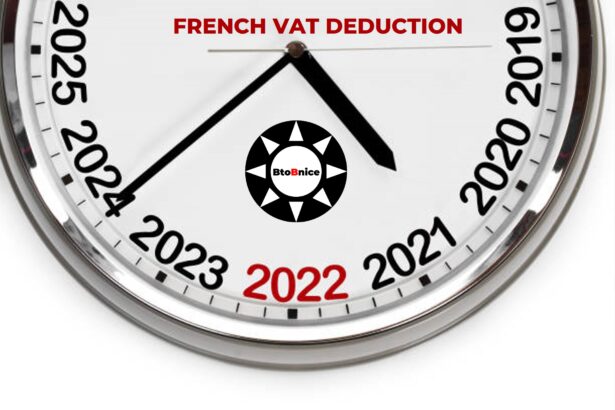
The BOFiP confirms that French VAT incurred before 21 February 2026 and previously blocked may be subject to an adjustment under the conditions set out in Article 207 III of Appendix II to the French Tax Code.
In practice:
- for services (marketing services, advertising campaigns, etc.), the absence of a multi-year adjustment mechanism generally limits retroactive recovery opportunities. However, VAT registered businesses may still review expenses incurred during open, non-statute-barred periods, which would typically include 2024 and 2025 at this stage, subject to the applicable filing procedures;
- for capital assets (certain durable advertising equipment or materials), VAT deduction may be available on the remaining fraction of the adjustment period. In practice, businesses should review movable advertising assets acquired or first used since 2021, as some may still allow a partial VAT adjustment in 2026, based on the remaining fifths of the adjustment period. For real estate assets, this period extends to 20 years.
In practical terms:
- expenses incurred from 21 February 2026 onwards: VAT may potentially be recoverable in full, subject to the usual input VAT recovery ratio;
- earlier expenses: VAT recovery may still be possible in certain cases, often partially, depending on the nature of the expense and the year of acquisition.
The key point will therefore be to determine the exact VAT qualification of each expense.
What is the impact for businesses?
This measure directly concerns:
- wine, spirits and beer producers operating in France;
- distributors and traders promoting alcoholic products in the French market;
- event organisers running tastings or trade fairs in France;
- specialist marketing agencies;
- hotel and event groups active in the French hospitality sector.
This is also relevant for foreign businesses (EU and non-EU) that incur French VAT on advertising or promotional activities carried out in France, and that may be entitled to recover this VAT through French VAT refund mechanisms.
For businesses with significant marketing budgets, this change can reduce the real cost of future campaigns and improve cash flow.
What actions should be taken?
We recommend that affected businesses:
1. Review past expenses
Identify advertising costs historically treated as non-deductible in order to assess whether an adjustment opportunity exists.
2. Update ERP and accounting settings
Legacy non-deductibility codes should be reviewed to avoid missing VAT recovery on future invoices.
3. Train finance and tax teams
This change is recent and technical, and may easily go unnoticed in internal processes.
4. Secure supporting documentation
The link between the expense and taxable business activity must remain properly documented in case of a tax audit.
Key takeaway
This reform is not a major VAT revolution, but it removes a historical anomaly that penalised certain market players in France.
For businesses active in this sector — whether established in France or simply incurring French VAT — this is worth reviewing. Between retroactive adjustment opportunities and immediate optimisation of future marketing costs, the financial impact may be meaningful.
At BTOBNICE, we help businesses identify historically overlooked VAT, assess adjustment opportunities and optimise their VAT recovery processes to improve cash flow: contact@btobnice.com
Source: BOFiP